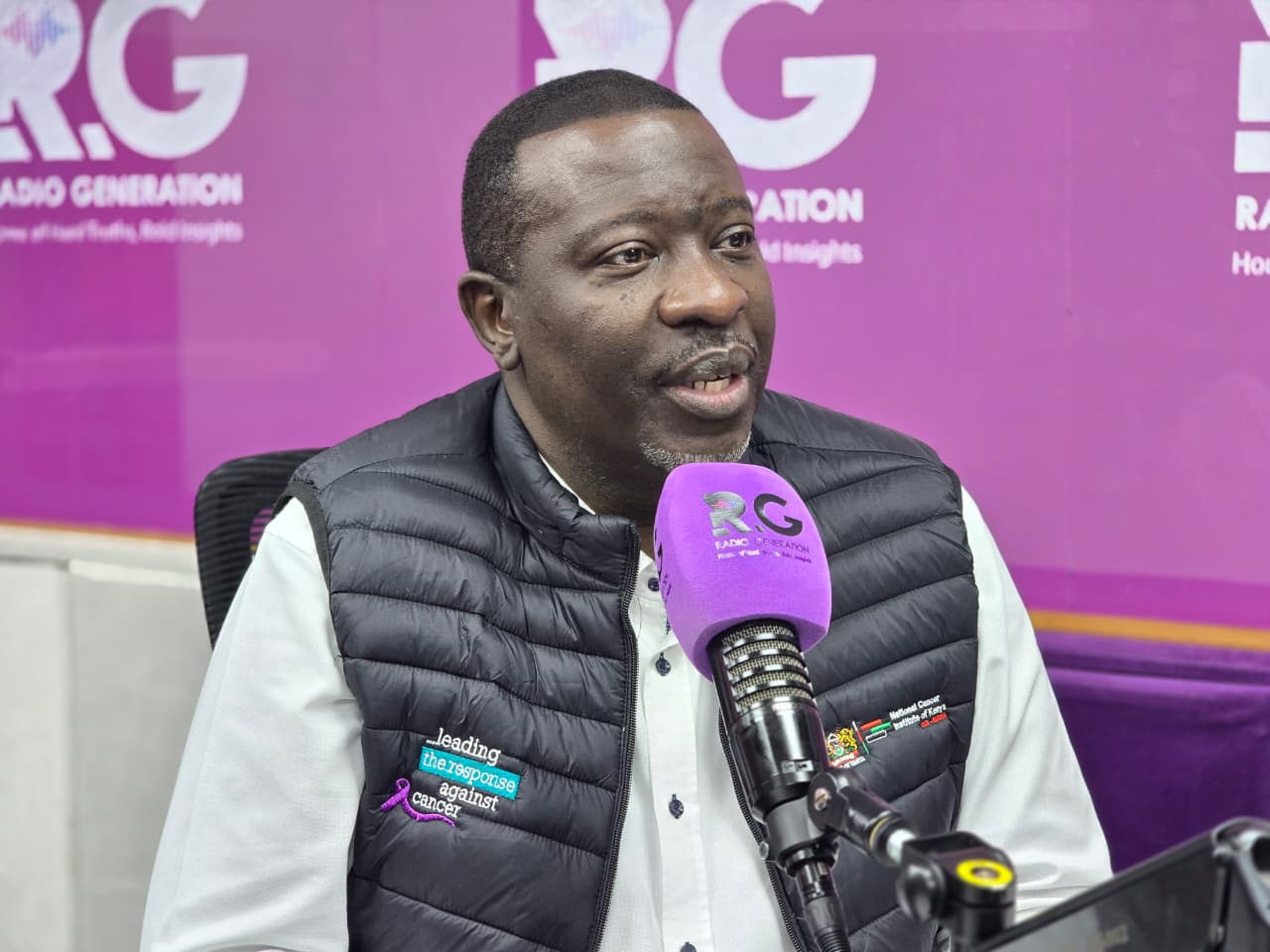
National Cancer Institute Chairperson Dr. Timothy Olweny says Kenya must urgently rethink how it deploys its cancer workforce, warning that the number of specialists available today is nowhere near enough to meet the country’s needs.
Speaking during an interview on Radio Generation, Dr. Olweny said the gap in cancer personnel remains vast, and growing demand will not be met simply by training more specialists.
“The numbers we have are a drop in the ocean. It is way below what we require,” he said.
According to the 2022 report by World Health Organization, there are fewer than 100 oncologists serving Kenya's population of 54 million people. This results in a severe shortage, with the ratio being approximately 1 oncologist for every 540,000 patients.
He argued that the country should focus on getting more value from the human resources already in place, especially at the lower levels of the health system, where most Kenyans first seek care.
Empowering clinical officers, nurses and other frontline staff, he said, could significantly improve early detection and speed up access to specialist care.
“We need to be more innovative in terms of how we utilize the resources we have,” he said. “We must empower the lower-level personnel so they can assist in identifying these cases, and make sure we channel a referral system that moves patients promptly to the highest-level specialist they can see, so we can intervene early.”
Dr. Olweny noted that health workers across professions, from doctors to nurses, already operate under umbrella associations and specialist groups. These networks, he said, are crucial for sharing information. But he added that one of the few positive outcomes of the COVID-19 pandemic was the rapid expansion of digital learning and virtual collaboration.
“One of the things I really thank COVID for is opening up this space of doing things online, knowledge sharing, meetings, everything,” he said.
He explained that before the pandemic, most professional training required physical attendance, limiting the number of people who could benefit, saying, “people are getting knowledge globally, on Zoom calls and meetings with people globally.”
Dr. Olweny said this digital shift has made it possible to reach even small facilities and lower-level practitioners who might otherwise miss out.
“Everybody’s got their professional associations, WhatsApp groups, and so on. So communication is much better,” he added.
He pointed out that access to medical information is now easier than ever, thanks to widespread internet use, saying the challenge is ensuring Kenya harnesses these tools fully.
“Information in this day and age of the internet is so much easier. We just need to utilize all these resources and make sure this information gets out,” Dr. Olweny said.
Dr. Olweny emphasized that strengthening cancer care will require a combination of empowered frontline workers, strong professional networks and a referral system that does not delay treatment.
“If we do this,” he said, “we can intervene early and improve outcomes for many more Kenyans.”